
Visa rules
Thailand just halved its visa-free stay. Four more rule changes to check before you book
Thailand cut 60 days to 30. Korea's K-ETA waiver and China's visa-free policy both have an end date, Brazil brought back visas, and Vietnam went the other way.
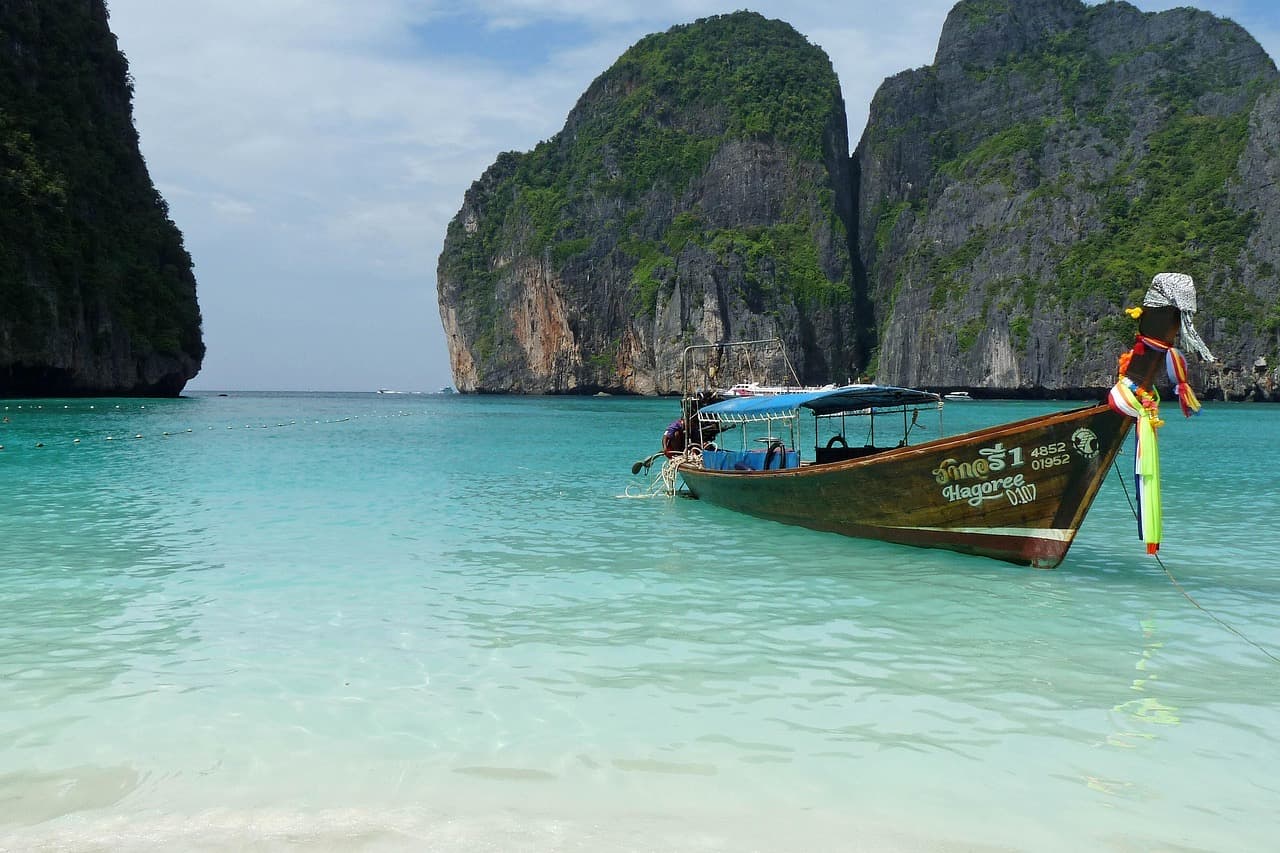
On 15 September 2026, Thailand quietly took away half of most visitors' visa-free time. If you hold a US, UK, Canadian, Australian, Japanese or EU passport, you used to get 60 days on arrival. Now you get 30.
It's the biggest change in our data this year, but not the only one. Here are five rules that moved in 2026, or are about to.
1. Thailand: 60 days became 30
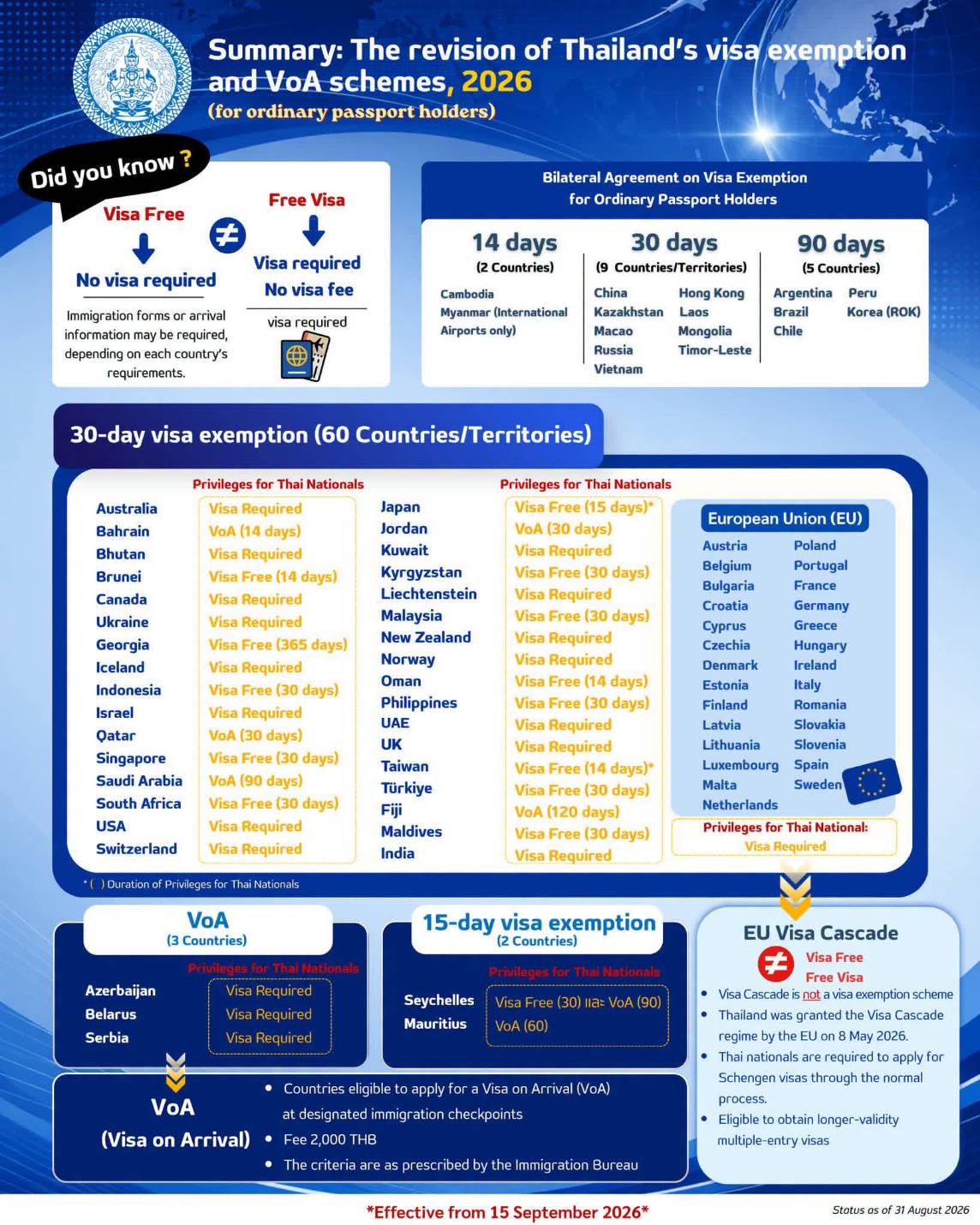
Thailand replaced its 60-day visa exemption with a 30-day one for tourism. You can ask the Immigration Bureau for one extension of up to 30 days once you're there. If you entered before 15 September under the old scheme, you keep the stay you were given.
Two things to watch:
- A few passports kept 90 days. South Korea, Brazil, Argentina and Chile have their own bilateral agreements with Thailand, so their citizens still get up to 90 days.
- Mexico lost visa-free entry entirely. Since 15 September, Mexican citizens need a visa for any trip to Thailand, applied for through the e-Visa system.
There is also a limit on how often you can use the exemption: twice per calendar year. Thailand's embassy in London states it generally, while the Tourism Authority describes it as a limit on land-border entries. If you plan to hop in and out of Thailand, check before you go.
2. South Korea: the free pass ends on 31 December
Most visitors to Korea are supposed to get a K-ETA, an online travel authorisation, before flying. Since April 2023, Korea has waived that for 22 countries, including the US, UK, Australia, Japan, Germany and France. The waiver has been extended several times. It currently runs until 31 December 2026.
If it isn't extended again, travellers from those countries will need a K-ETA from 1 January. It costs 10,000 won and lasts three years. Not everyone was on the waiver list: Mexican, Argentine, Chilean and Israeli citizens already need one.
Canadians get a better deal than most: up to 180 days visa-free, not 90.
3. China: visa-free for many, with an end date
China lets citizens of the UK, Canada, Australia, New Zealand, Japan, South Korea, Brazil, Argentina, Chile and several EU countries visit for up to 30 days without a visa. One detail catches people out: the 30 days are counted from midnight the day after you arrive.
For the UK, Canada and the European countries we cover, China says the policy runs until 31 December 2026. US citizens are not on the list and still need a tourist visa.
4. Brazil: visas are back for three countries
Since 10 April 2025, US, Canadian and Australian citizens need a visa for Brazil again. Brazil's official visa table from August 2026 confirms it's still in force. Canada's government puts the e-visa at about US$80.90, valid five years.
UK and most European visitors are unaffected: up to 90 days, no visa.
5. Vietnam: 45 days, guaranteed until 2028
Vietnam went the other way. Citizens of the UK, Japan, South Korea, Germany, France, Italy, Spain and the Netherlands can stay up to 45 days without a visa, and the policy runs until 14 March 2028. US, Canadian and Australian citizens still need an e-visa, which covers up to 90 days.
Before you book
Rules like these change with a cabinet decision, and old blog posts keep repeating the previous number for years. Check your exact passport and destination in Trip Check. Every answer there links to the government page it comes from, so you can see the date it was checked.
Destinations covered in this post
Checked against official sources: 2026-10-05
See this in the verification changelog →
Informational only — not legal advice and not an official determination of your right to stay. Always verify with official authorities. We are not affiliated with the European Union.